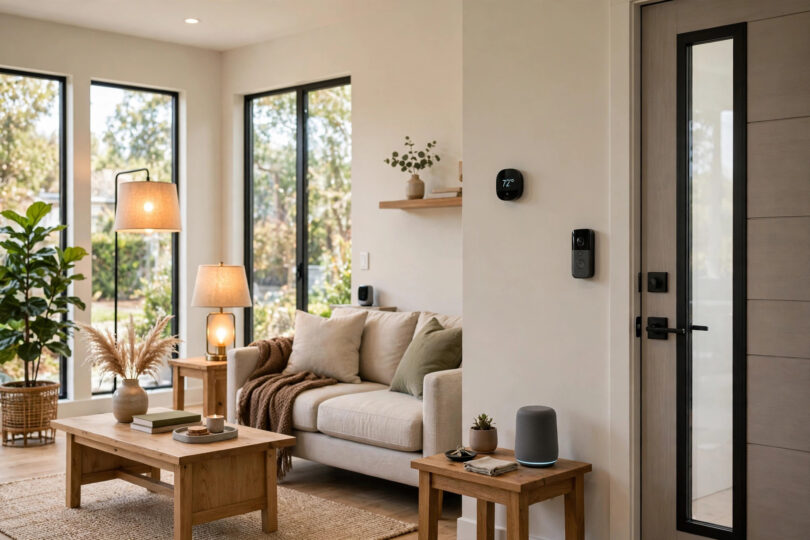

Smart home technology can sound like a hobby for engineers, full of hubs, protocols and complicated automations. In reality, the best smart home gadgets for beginners are simple devices that solve one everyday annoyance each: lights that turn themselves on when you come home, a speaker that sets timers while your hands are covered in flour, a plug that switches the heater on before you get out of bed. If you have been curious but put off by the jargon, these smart home gadgets for beginners are the friendly place to start, with no wiring, no tools and no technical knowledge required.
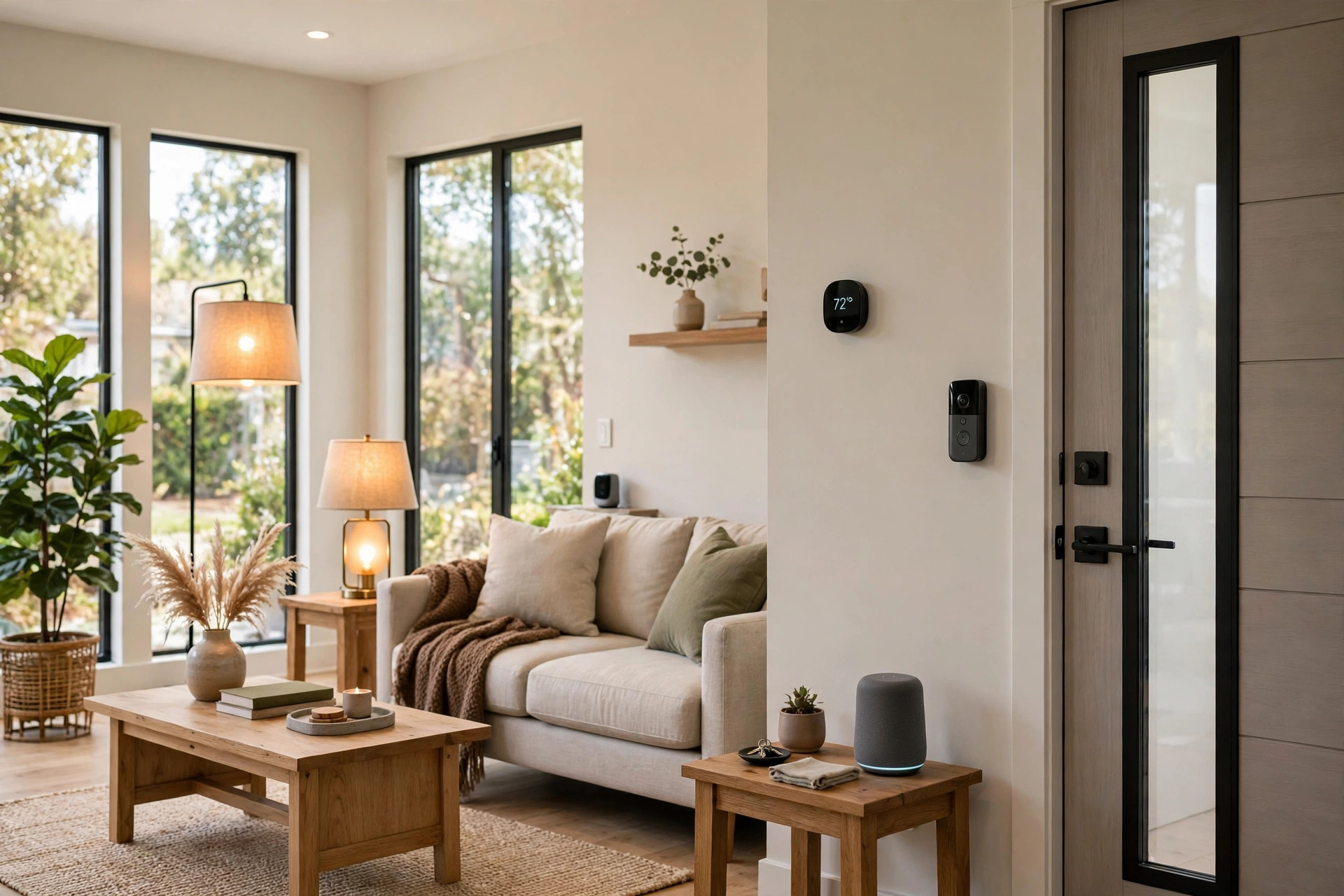
Start With One Problem, Not a Whole System
The happiest smart home owners did not buy a system; they fixed one irritation at a time. Forget to turn off lights? Start with a smart bulb. Hate coming home to a dark house? A smart plug on a hallway lamp solves it. Chilly mornings? A plug on the heater, scheduled for twenty minutes before your alarm. Each gadget earns its place by removing a small daily friction, and the collection grows naturally, one solved problem at a time.
What You Need Before You Buy
The requirements are modest: a home Wi-Fi network, a smartphone, and one free app or voice assistant account. Almost every beginner device works by screwing in, plugging in or sticking on, and connects through a guided setup that takes a few minutes. Pick devices that work with one of the major voice assistants so everything eventually speaks the same language, and keep the boxes and passwords somewhere sensible for future reference.
Smart Bulbs: The Easiest First Step
Smart bulbs top every list of smart home gadgets for beginners for good reason. They fit standard sockets, need no wiring, and immediately give you dimming, warm-to-cool colour adjustment and scheduling from your phone. A wake-up routine that gently brightens the bedroom over twenty minutes feels like a luxury far beyond the price. A holiday schedule that turns lights on and off at varied times makes an empty house look lived in. Start with one or two bulbs in the rooms you use most, perhaps the living room and bedroom, and expand only if you enjoy them.
Smart Plugs: Make Dumb Devices Smart
A smart plug sits between any appliance and the wall socket, letting you switch it by app, voice or schedule. They bring older, perfectly good devices into the smart home for very little money: lamps, fans, heaters, coffee makers, even the slow cooker. Many models also report energy use, which quietly reveals which appliances cost the most to run. For pure convenience per pound or dollar spent, smart plugs rival bulbs as the best first purchase.
- Lamps: schedule a warm welcome home and never fumble for a switch in the dark.
- Heaters and fans: warm or cool the room before you enter it.
- Coffee and breakfast: wake to a machine already switched on and ready.
- Hard-to-reach sockets: control appliances behind heavy furniture from your phone.
A Voice Assistant Speaker Ties It Together
A small smart speaker is the friendly control centre of the beginner smart home. Once your bulbs and plugs are connected, you can control them by voice, which is the moment the technology stops feeling like a gadget and starts feeling like the house helping you. Beyond lighting, the speaker handles timers, music, weather checks, shopping lists and reminders, all hands-free. Place it where life happens, usually the kitchen or living room. More setup ideas and room-by-room suggestions live in our Smart Living section.
Simple Sensors, Surprising Delight
Motion and contact sensors sound advanced but are among the simplest smart home gadgets for beginners to live with. A motion sensor in the hallway turns a soft light on for night-time trips to the bathroom and off again afterwards. A sensor on the landing does the same for children and older relatives, quietly preventing falls. Contact sensors on doors can send a phone alert when they open, a reassurance for families, and some owners simply use them to check the front door was closed after a rushed morning exit.
Video Doorbells and Indoor Cameras
When you are ready for a second step, a video doorbell is the most appreciated upgrade in the category. Answer the door from the sofa or the office, speak to delivery drivers, and see parcels arrive. Indoor cameras suit pet owners who want to check in during the day, and parents who want peace of mind. Respect privacy as you set them up: point cameras at doors and shared spaces, never bedrooms, and tell household members and guests where they are. The roundups and everyday guides on the Homelyxa home page cover these devices in more depth as the range grows.
Keep It Simple and Secure
Two habits protect both your sanity and your security. First, use strong, unique passwords for your accounts and turn on two-step verification; the gadgets are only as safe as the account that controls them. Second, resist over-automating. The best beginner setups have a handful of routines everyone in the house understands, lights on at sunset, off at bedtime, heater on before the alarm, rather than dozens of clever rules that confuse guests and grandparents. If a visitor cannot turn on a light, the home is not smart yet, whatever the app says.
What It Costs to Get Started
One of the pleasant surprises of this category is the price of entry. A single smart bulb or plug is among the cheapest home upgrades you can buy, and many people build their whole first setup, two bulbs, two plugs and a small speaker, for less than the cost of a family takeaway night. There are no installation fees and usually no subscriptions, and because you add devices one problem at a time, the spending spreads out naturally across months. Start with the device that solves your most annoying daily friction, live with it for a fortnight, and let that experience, not advertising, decide what joins it next.
Conclusion
You do not need a rewired house or a technical hobby to enjoy a smarter home. Start with one problem, fix it with a smart bulb or plug, add a speaker when you want voice control, and let sensors and a doorbell follow when you are ready. These smart home gadgets for beginners prove their worth in small daily moments, and that is exactly how a genuinely helpful smart home gets built: gradually, practically and around real life.