
Small kitchens punish clutter mercilessly. Every spare centimetre of counter is precious, yet the cooking tools, ingredients and appliances keep coming. The answer is not a bigger kitchen; it is better use of the one you have. Clever small kitchen storage solutions turn walls, doors, gaps and forgotten corners into working storage, so everything you own has a home and your worktops stay clear enough to actually cook on. These small kitchen storage solutions suit renters and owners alike, most cost very little, and nearly all of them can be fitted in an afternoon.
Think in Zones, Not Cupboards
Before buying anything, look at how you cook. Small kitchens work best when equipment lives where it is used: knives, boards and utensils within arm’s reach of the main work surface, pots beside the hob, mugs and tea near the kettle, cleaning supplies under the sink. In a small room this zoning is not a luxury; it is what stops cooking from becoming a constant walk between cupboards. Move things around for a week before drilling any holes, and let real meals tell you where everything belongs.
Claim the Walls
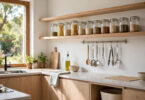
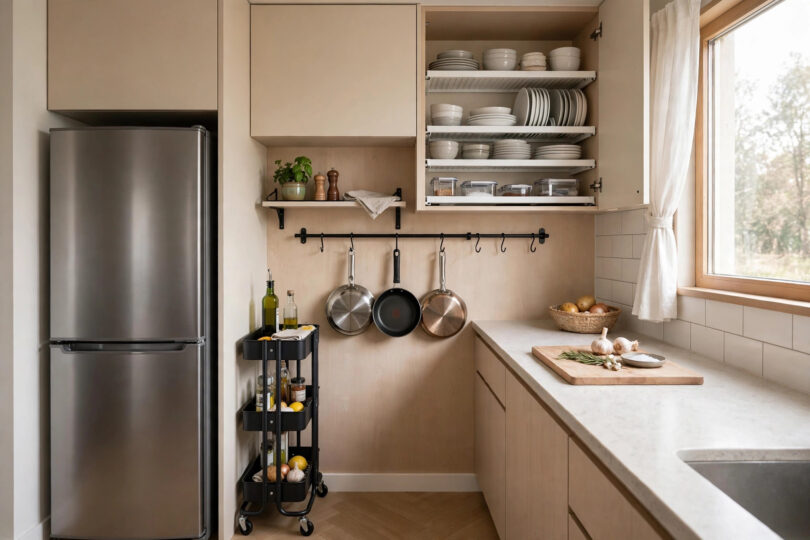
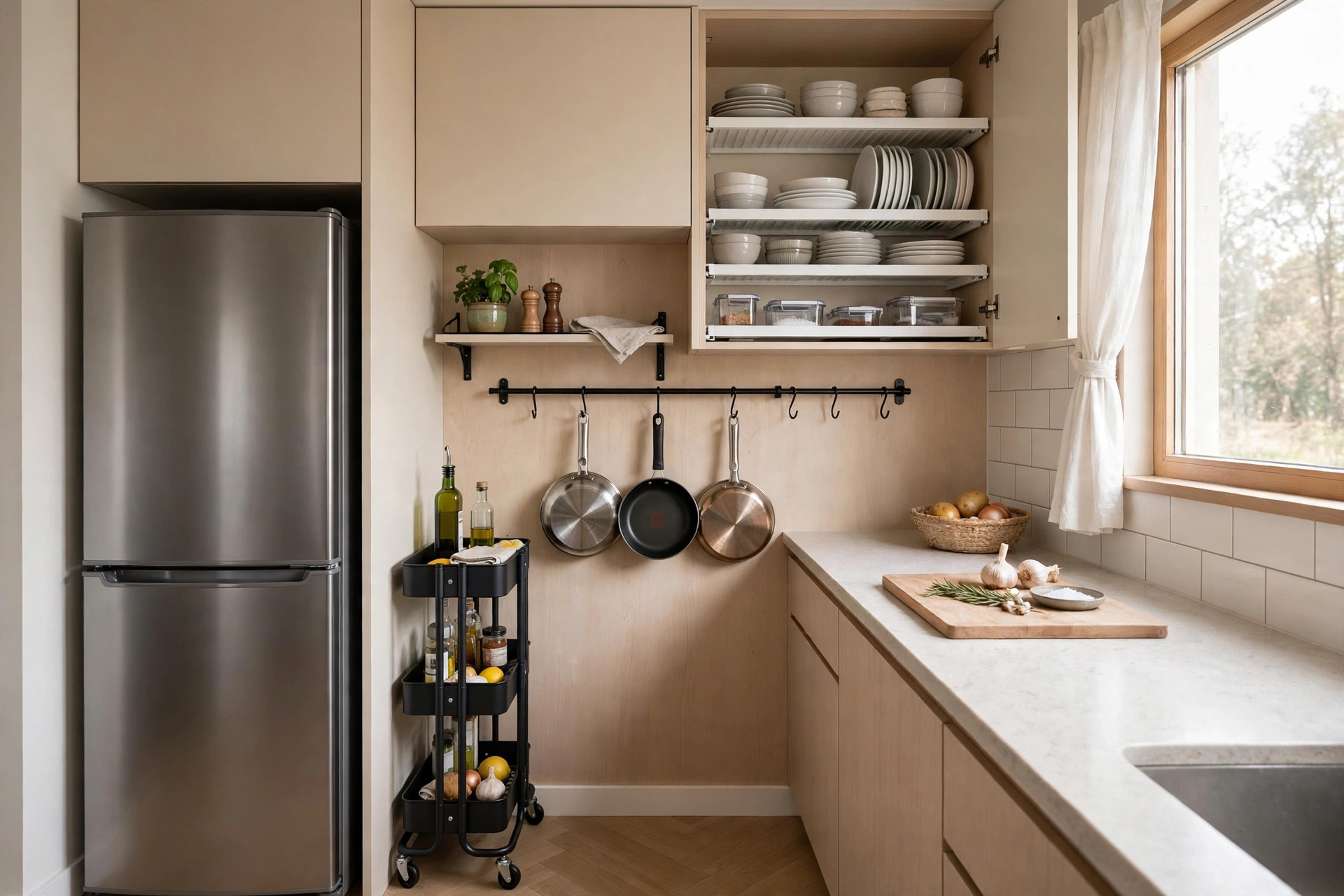
Walls are the largest unused storage surface in most small kitchens. A simple rail with hooks holds utensils, measuring cups, scissors and even small pans, freeing an entire drawer. A magnetic knife strip keeps blades safe, sharp and off the counter. Narrow picture ledges or spice shelves hold jars where you can see every label, and a pegboard, painted to match the room, gives flexible, movable storage for tools of every shape. Our detailed guide to the best kitchen storage ideas for a clean and organized space explores these wall systems with layout suggestions for different room shapes.
Use the Insides of Doors
Cupboard doors are storage hiding in plain sight. Slim racks on the inside of a door hold cling film, foil, baking paper and spice packets. An over-door organiser on a pantry or utility door swallows cleaning bottles, cloths and shopping bags. Under the sink, a tension rod hung high inside the cabinet gives spray bottles a place to hang by their triggers, freeing the floor of the cupboard for a small stacking shelf or caddy.
Make Cabinets Double Up
Most cabinets waste the tall space between shelves. Shelf risers, simple wire or wooden inserts, instantly double the usable surface for plates, bowls, mugs and tins. Stackable boxes and clear containers let you use the full depth of a deep cupboard without losing things at the back, and a lazy Susan turntable in a corner cabinet turns the most awkward space in the kitchen into one of the most accessible. Group items in containers and you can pull a whole category, baking supplies, breakfast things, out in one motion.
- Shelf risers: double stacking space in tall cupboards.
- Turntables: rescue corner cabinets and deep shelves.
- Clear containers: decant dry goods so quantities are visible at a glance.
- Vertical dividers: store trays, boards and lids upright like files.
Exploit Gaps and Awkward Corners
Look at your kitchen with fresh eyes and you will find storage hiding in gaps. The few inches between the fridge and the wall can take a slim rolling trolley for bottles, jars and tins. The space above cabinets, often wasted, holds baskets of rarely used items such as party dishes and seasonal bakeware. A folding step stool, hung on a hook, makes high shelves safely usable instead of theoretical. Even the kick space beneath cabinets can, in fitted kitchens, conceal shallow drawers for trays and linens.
Choose Tools That Earn Their Space
In a small kitchen, every object must justify itself. Favour tools that nest, stack, fold or do two jobs: collapsible colanders and measuring cups, nesting mixing bowls, a pot with a steamer insert, one excellent knife instead of a block of mediocre ones. The checklist of daily cooking essentials for a well-equipped kitchen is a good test of what genuinely deserves a place. If an appliance has not been used in a year, it is not storage for the kitchen; it is storage for a charity shop. More space-saving thinking lives in our Kitchen Essentials section.
Keep Counters Sacred
Whatever storage you add, protect the worktop. In a small kitchen the counter is workspace first and storage last. Keep only the true daily items out, and give everything else a home in the zones and systems above. A clear counter makes the room feel larger instantly, is faster to clean, and means you can start cooking the moment you walk in rather than after five minutes of clearing.
A One-Afternoon Starter Plan
If the whole room feels daunting, here is a realistic order to work through in a single afternoon. First, clear and wipe every counter, and honestly rehome anything that has not been used this month. Second, fit one wall rail or magnetic strip and move utensils and knives onto it, freeing a drawer for the items that were crowding the worktop. Third, add shelf risers to your tallest cupboard and decant your most-used dry goods into clear containers you already own. Fourth, claim one door with a slim rack for wraps, packets and cloths. Stop there, cook dinner in the improved kitchen, and notice what still frustrates you; that observation, not a catalogue, should choose your next project. Storage bought in this order is storage you know you need, fitted to the way you actually cook, and it tends to stay tidy because every piece of it solved a problem you had already felt.
Conclusion
Small kitchen storage solutions are really about seeing your room differently: walls become shelves, doors become racks, gaps become trolleys and tall cupboards learn to double up. Zone your equipment, claim the vertical space, choose tools that earn their footprint and keep the counters for cooking. Pick the single most annoying storage problem in your kitchen and fix it this weekend; the relief will persuade you to do the next one, and then the one after that, until the smallest room in the house works the hardest for you.